


Latest Products
We keep on updating and iterating our products, optimizing the structural design and creating a more scientific and reliable slewing drive device.
-
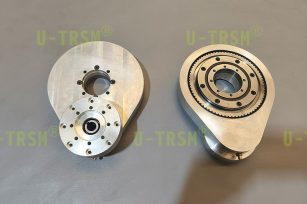
 Lightweight design and performance of U-TR...
In the field of high speed automated mechanical equipment, the performance and light weight of the core drive compone...
Detailed instructions Send mail -
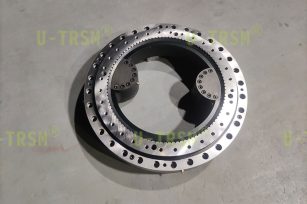 Analysis of lightweight double gear slew d...
Core Design Advantages In response to the core demands of limited installation space for automated rotating pl...
Detailed instructions Send mail -
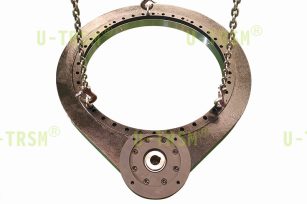 Selection and characteristics of slewing d...
This slewing drive is used in automated mixing equipment. The customer requires that it rotate in the same direction ...
Detailed instructions Send mail -
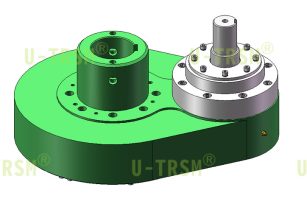 Analysis of the high speed rotating double...
This double row ball gear type slew drive is used in automation equipment. The customer requires ultra-high speed ope...
Detailed instructions Send mail
How to choose the safety factor for slewing drives under different working conditions?
Publish time:2025/01/09 News Views:190
In the design and manufacture of slewing drives by U-TRSM, the selection of a safety factor for the torque transmitted by the gears under different operating conditions is a complex and critical design consideration. The safety coefficient is directly related to the reliability and durability of the gear transmission system, U-TRSM design engineers based on years of design and manufacturing experience, according to different working conditions on the gear transmission torque safety coefficient summed up the following experience:
In the normal operation of the gear transmission system, it is mainly in the starting, constant speed, braking and other working conditions.
Starting conditions: Because the motor torque is the largest during starting and the gears are subjected to larger impact loads, a higher safety factor should be selected, and a safety factor of between 1.25 and 1.50 is generally recommended to ensure that damage due to overloading does not occur during the starting process, a safety factor between 1.25 and 1.50 is generally recommended to ensure that damage due to overload does not occur during start-up.
Constant speed condition: In constant speed movement, the load is relatively stable, but also need to consider the wear and fatigue effects on gears in long-term operation, at this time, the safety factor can be selected between 1.0-1.25, depending on the design life and reliability requirements.
Braking conditions: There is also a large shock load during braking, but probably smaller compared to starting conditions, the safety factor can be selected slightly lower than the starting conditions, but still need to be kept at a high level, has to ensure that the braking process is smooth and safe, such as motor short-circuit and other non-routine conditions. At this time, the gear transmission system is loaded with the maximum value of all working conditions, due to the sharp increase in load, the strength and durability of the gears to put forward higher requirements, so choose the highest factor of safety, generally recommended between 1.5-2.0, or even higher, in order to ensure the safety and reliability of the gear transmission in extreme conditions.
The higher the material strength, the higher the load capacity of the gear, and the corresponding safety factor can be appropriately reduced.
The higher the manufacturing accuracy, the more precise the gear meshing, the less wear and fatigue damage, and therefore the safety factor can be appropriately reduced.
Good lubrication can significantly reduce the friction and wear of gears, improve transmission efficiency and service life, under the premise of good lubrication conditions, the safety factor can be appropriately reduced.
For gears with a long design life or high reliability requirements, a higher safety factor should be selected.
Regular inspection and maintenance of gears to extend their service life ensures the safe and reliable operation of the transmission system.
- Causes and treatment of noise produced by ...
- Why does the slewing bearing shake after i...
- Spur gear slew drive housings adopt spray ...
- How to choose couplings when designing spu...
- The classification of slew drive toroidal ...
- Analysis of the influence of sliding speed...
- How does U-TRSM quickly and efficiently pr...
- How to install the slewing drive and what ...