


Latest Products
We keep on updating and iterating our products, optimizing the structural design and creating a more scientific and reliable slewing drive device.
-
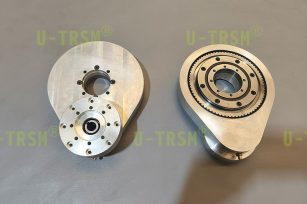
 Lightweight design and performance of U-TR...
In the field of high speed automated mechanical equipment, the performance and light weight of the core drive compone...
Detailed instructions Send mail -
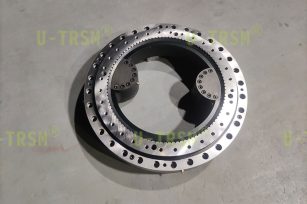 Analysis of lightweight double gear slew d...
Core Design Advantages In response to the core demands of limited installation space for automated rotating pl...
Detailed instructions Send mail -
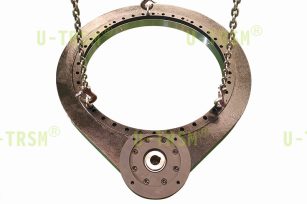 Selection and characteristics of slewing d...
This slewing drive is used in automated mixing equipment. The customer requires that it rotate in the same direction ...
Detailed instructions Send mail -
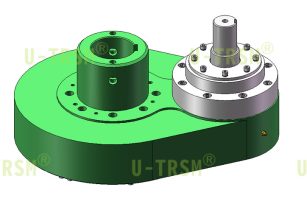 Analysis of the high speed rotating double...
This double row ball gear type slew drive is used in automation equipment. The customer requires ultra-high speed ope...
Detailed instructions Send mail
Analysis of the anti-corrosion design for slewing drive
Publish time:2024/03/25 News Views:238
When designing slewing drives, U-TRSM engineers often encounter special requirements such as corrosion resistance and waterproofing. After many experiments and accumulated experience in design and production, we have been fully able to meet these needs. The working conditions of this type of slewing drive are generally bad, the environment is poor, and it is not easy to disassemble and replace after the product is damaged. U-TRSM design engineers will make reasonable designs according to the specific working conditions, such as anti-corrosion coatings, easy replacement of parts, etc.
Corrosion is a chemical reaction between the metal and the surrounding medium, which can cause serious damage to parts and components. The friction of the steel balls between the internal grooves of the slewing drive, the friction of the teeth between the gears, etc., will heat up when the rotational speed is too fast, and the heat will be transferred to the external housing and flange, and the higher the thermal instability of the part material, the more prone to corrosion effects. Corrosive effects can also occur in environments such as water vapor and alkaline gases around parts.
So anti-corrosion is the first task we have to do, usually we will achieve the customer’s purpose through the following means.
1. Improving corrosion resistance in structure by using corrosion-resistant materials to fundamentally solve problems. However, the materials used for corrosion protection are generally more expensive, resulting in excessive cost increases. Generally, anti-corrosion treatment is carried out on the surface of the part, such as electroplating, spraying, etc., or a layer of inert non-metallic material or a metal layer with a low corrosion rate is added to the exposed surface of the material.
2. To prevent deposition, in corrosive environments, water vapor or other water flows, etc., will cause deposition corrosion at the surface depressions of the slewing drive, the joints of various parts, so the surface of the parts should be smooth and flat, and the gaps that cannot be avoided at the joints of various part should be filled, such as with polymer materials.
3. Replacing corroded parts, sometimes the corrosion of parts is inevitable, and it is the most economical and convenient to replace the corrosive parts in time on a regular basis.
There are many methods of corrosion resistance for slewing drives, and our main consideration is economy. Sometimes replacing a part is much cheaper than using corrosion-resistant materials, and sometimes the damage caused by replacing a part that causes equipment downtime is even greater. The above is a few experiences that U-TRSM has briefly summarized in the corrosion-resistant design of slewing drives.
- Reason analysis and solutions for the prob...
- What material is the seal on the slewing r...
- What are the advantages of using planetary...
- How to choose the roller length of the thr...
- Advantages and disadvantages of double lea...
- How to process the slewing bearing raceway...
- What are the requirements for the gear mac...
- Why use thread fastening glue for spur gea...