


Latest Products
We keep on updating and iterating our products, optimizing the structural design and creating a more scientific and reliable slewing drive device.
-
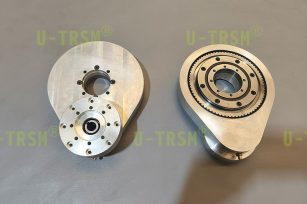
 Lightweight design and performance of U-TR...
In the field of high speed automated mechanical equipment, the performance and light weight of the core drive compone...
Detailed instructions Send mail -
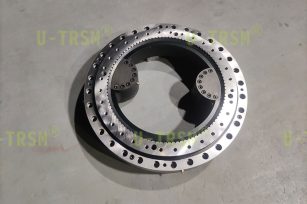 Analysis of lightweight double gear slew d...
Core Design Advantages In response to the core demands of limited installation space for automated rotating pl...
Detailed instructions Send mail -
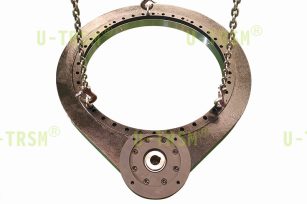 Selection and characteristics of slewing d...
This slewing drive is used in automated mixing equipment. The customer requires that it rotate in the same direction ...
Detailed instructions Send mail -
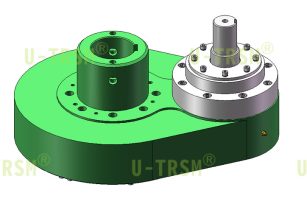 Analysis of the high speed rotating double...
This double row ball gear type slew drive is used in automation equipment. The customer requires ultra-high speed ope...
Detailed instructions Send mail
How should the slewing drive be maintained?
Publish time:2022/02/17 News Views:544
The slewing drive device should be maintained in accordance with the regulations during use, so as to ensure the safe and normal operation of the equipment. The specific operations are as follows:
1. Check the gap
When the slewing drive is running, the teeth between the internal worm and the gear rub against each other, which will cause wear and tear, resulting in a rotation gap between the worm and the worm gear. If the gap is too large, it will pose a safety threat. Therefore, it is necessary to check it during use, and the frequency of inspection is generally after 700 hours of operation or every 6 months.
It should be noted that when measuring the rotation gap, the motor must be disconnected, the worm must be turned by hand, and the rotation angle of the worm relative to the previously specified starting position must be measured. If the gap reaches 15°, the previously specified inspection interval must be reduced to every 200 hours. If the clearance continues to increase, the inspection should be reduced to every 50-100 hours, and if the maximum allowable value is exceeded, the swing drive must be replaced.
2. Check the mounting bolts
Some equipment will have strong vibration during operation, which will cause the mounting bolts of the rotary drive to loosen. Therefore, after running for a period of time, the bolts should be re-tightened to the specified torque. Inspection frequency should be every 700 hours of operation or at least every 6 months. The inspection period should be shortened under special operating conditions. If bolts, nuts or washers are loose, all bolts, nuts and washers should be replaced with new ones.
3. Check the tilt clearance
The slewing bearing inside the slewing drive will wear the raceway after a long period of operation, resulting in an increase in the inclined clearance. It should therefore be checked after 700 hours of operation of the swing drive or every 6 months. The specific operation steps are as follows:
• The value of the measuring point determined after the installation of the slewing drive is taken as the basic value and deducted from the measured value.
• The difference between the last value and the first value must not exceed 0.2 mm.
• If the measured tilt clearance increases, the inspection interval should be reduced to 200 hours.
• If the tilt clearance increases further, the inspection interval should be shortened again to 50 – 100 hours.
• If the maximum allowable tilt clearance increases, replace the swing drive.
4. Lubrication frequency and oil injection amount of rotary drive
For relubrication of the worm, it is necessary to inject grease into all grease fittings while the swing drive is rotating, ensuring that the old grease can flow freely from the unit.
General recommended relubrication schedule:
• Worm gear bearings: 20 – 40 grams every 6 months or 300 hours.
• Worm gear teeth: 100 – 150 grams, every 6 months or 300 hours.
• Slewing Rings: 100 – 150 grams, every 6 months or 300 hours.
5. Check the seals
It is also important to check the seals during work on the slewing drive. If the seal is damaged, it will cause debris and moisture to enter the inside of the swing drive, causing unstable operation or direct damage to the swing drive. Damaged seals must therefore be replaced.
- The importance of the difference between t...
- What problems will affect the service life...
- Gear transmission noise: problem analysis ...
- U-TRSM can meet the non-standard slewing d...
- How to choose the external gear slewing dr...
- High precision same direction flange spur ...
- Introduction to commonly used rolling elem...
- Some Technical Information You Should Know...